The Secret to Looking Polished When It’s Too Hot to Dress Up
The Secret to Looking Polished When It’s Too Hot to Dress Up
There’s a particular kind of defeat that comes around mid-July, when you stand in front of your closet and realize that everything you own feels like a punishment. The blazer you relied on all spring now reads as a torture device. Your favorite dark jeans might as well be made of neoprene. Even that breezy blouse you bought specifically for summer has somehow betrayed you, clinging in all the wrong places the moment humidity creeps past sixty percent.
And yet, the world doesn’t stop expecting you to look like you have it together. Meetings still happen. Dinners still get planned. You still catch your reflection in shop windows and want to feel something other than resigned.
So how do people manage it? How do some women walk through August looking like the heat is merely a backdrop to their elegance, while the rest of us dissolve into wrinkled, flushed disarray? The answer isn’t about spending more money or owning better clothes. It’s about understanding a completely different set of rules, ones that have almost nothing to do with the layering and structure we rely on during cooler months.
The Misconception That Polished Means More
We’ve been trained, culturally, to associate looking “put together” with complexity. More layers. More accessories. More intentional coordination between elements. A tailored jacket. A silk scarf. A structured bag that matches the tone of your shoes. This formula works beautifully nine months of the year. But heat doesn’t negotiate with formulas.
The mistake most people make in summer is trying to compress the same level of complexity into fewer, thinner garments. They swap the wool blazer for a linen one, keep the structured trousers but switch to a cropped length, add a statement necklace to compensate for showing more skin. The result often looks like someone trying very hard, which is the opposite of polished.
Real polish in extreme heat comes from reduction. Not reduction as in wearing less fabric, though that helps, but reduction as in fewer decisions competing for attention. One clean line instead of three interesting ones. A single texture doing all the work instead of a carefully curated mix. The goal shifts from “look at how well I put this together” to “look at how effortless this appears,” even if the effortlessness took its own kind of thought.
Fabric Is Doing Ninety Percent of the Work
Here’s something nobody tells you early enough in your style education: when the temperature pushes past eighty-five degrees, your outfit’s success is determined almost entirely before you even consider silhouette, color, or accessory. It’s determined by what the garment is made of.
A cotton poplin dress in a mediocre cut will look infinitely more polished than a beautifully designed polyester blouse by noon. This isn’t subjective. Synthetic fabrics trap heat, encourage visible perspiration, and wrinkle in ways that look cheap rather than characterful. They also develop that subtle sheen of static and body heat that reads as disheveled, even when the garment technically fits well.
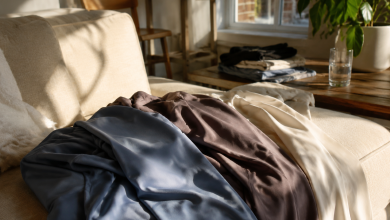
The fabrics that survive summer with dignity are boring to talk about but transformative to wear. Linen, obviously, earns its reputation. But there’s also cotton voile, a fabric so light it barely registers on your skin. Tencel and modal blends move with a fluidity that mimics silk without silk’s tendency to show every drop of moisture. Lightweight merino wool, counterintuitively, breathes better than most synthetics and resists odor far longer.
Investing in fabric quality for even three or four summer staples will change your relationship with hot weather dressing more dramatically than any style trick ever could.
The Power of a Deliberate Silhouette
When you strip away layers and structure, what you’re left with is shape. And shape, in summer, needs to be chosen with intention rather than defaulted into.
There’s a reason the most elegant women in Mediterranean and tropical climates gravitate toward volume in specific places. A wide-leg trouser in fluid fabric. An oversized shirt dress that skims rather than clings. A kaftan-adjacent shape that creates its own architecture through drape rather than seaming. Volume allows air to circulate, prevents fabric from adhering to skin, and creates a visual impression of ease that reads as sophisticated rather than sloppy.
The trap is shapelessness without purpose. An oversized t-shirt with baggy shorts reads as giving up. But a deliberately proportioned wide-leg pant with a simple fitted tank creates a clear visual ratio, something the eye can follow and understand. The polish comes from the intentionality, from the sense that someone chose this exact relationship between fitted and loose, rather than simply grabbing what was coolest to wear.
A useful framework: pick one area of the body to define and let everything else breathe. Waist defined, limbs free. Shoulders sharp, everything below flowing. This single point of structure replaces the multiple structural elements you’d normally rely on.
Color Requires a Different Strategy
The instinct in summer is to go light. Whites, creams, pale blues, soft pastels. And this instinct isn’t wrong. Light colors reflect heat, feel psychologically cooler, and photograph well in bright natural light.
But an all-light palette can also wash out, especially in midday sun where everything bleaches to a similar value. The women who look most polished in summer often employ one of two contrasting strategies.
The first is committing fully to white or cream but ensuring the outfit has textural depth. An all-white look in a single fabric reads as a uniform. The same all-white look in mixed textures, ribbed knit against smooth cotton against raw linen, suddenly has dimension and intention. The color does nothing, but the surface variety does everything.
The second strategy is introducing a single saturated color against a neutral base. Not a pattern, not a print, but one definitive shade. A rich terracotta linen pant with a white tank. A cobalt cotton dress with natural leather sandals. Saturated color in summer light has a vibrancy that reads as deliberate and alive, and it eliminates the need for accessories or layering to create visual interest.
What tends to fail is the busy print. Florals and geometrics can absolutely work, but they demand more careful coordination and have less margin for error when you’re limited in how many other elements you can add. Solid color gives you polish almost automatically.
The Details That Replace Accessories
In cooler weather, accessories carry enormous weight. A good watch, a structured bag, layered necklaces, a silk scarf, sunglasses pushed up into hair that was styled that morning. These elements signal care and investment.
Summer strips most of these away by necessity. Heavy jewelry feels oppressive. Structured bags look incongruent with fluid clothing. Scarves become absurd. And hair, frankly, is in survival mode.
So polished summer dressing relocates “detail” into the garments themselves. A neckline that does something interesting. A sleeve with a slight volume or a deliberate rolledcuff. A hem that hits at exactly the right point on the leg. A single sculptural earring. Clean, maintained sandals that look intentional rather than like house shoes you wore outside.
Grooming carries more weight too, and this is the part people don’t always want to hear. When your outfit is stripped to essentials, the eye goes to skin, nails, hair, posture. A simple sundress looks entirely different on someone with moisturized skin, clean nails, and hair that’s been deliberately styled into a low bun versus someone who threw the same dress on while running out the door. Neither version is wrong, but only one reads as polished.
This isn’t about performing femininity or spending hours getting ready. It’s about the reality that minimal outfits have nowhere to hide. Every element that remains visible matters proportionally more.
Why It Feels Different This Time
There’s a generational shift happening in how we think about summer dressing, driven partly by climate change making heat seasons longer and more extreme, and partly by a cultural move away from performative discomfort in fashion.
The old model said: suffer for polish. Wear the pantyhose. Keep the blazer on. Don’t let them see you sweat, literally. The emerging model says something more honest: dressing well in heat means respecting the conditions rather than fighting them. It means building a warm-weather wardrobe with as much intention as a cold-weather one, rather than treating summer clothes as lesser, cheaper, or less worthy of investment.
The women I know who consistently look polished in July aren’t following trends. They’ve simply figured out their personal version of the principles above. They know their fabrics. They know their silhouette. They’ve stopped trying to make cold-weather logic work in warm-weather conditions. And they’ve accepted that looking good in the heat is its own distinct skill, related to but separate from the rest of their style knowledge.
The secret, ultimately, isn’t a single garment or trick. It’s the willingness to let go of one system and learn another.