
The Most Expensive Items Ever Sold at Auction and the Legends Behind Them
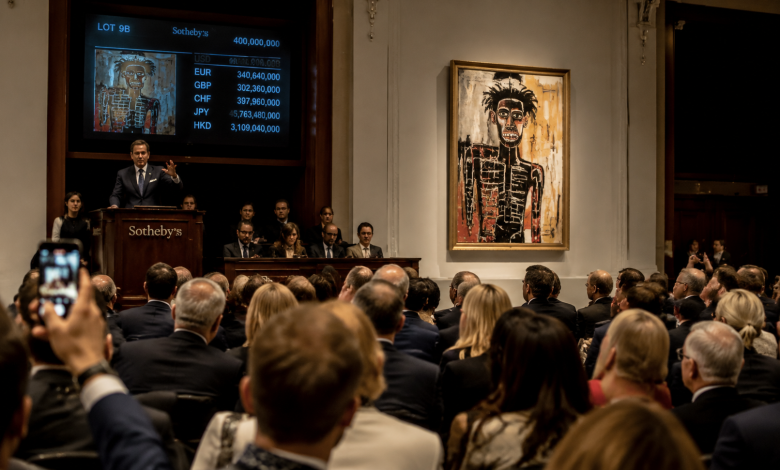
There is something almost primitive about the auction room at its peak moment. A paddle rises. A number flashes. And in the span of a few seconds, an object changes hands for a sum that could fund a small nation’s healthcare system for a year. What compels someone to spend hundreds of millions on a canvas, a diamond, or a manuscript? The answer is never as simple as wealth looking for a place to land. Behind every record-breaking sale is a story dense with obsession, rivalry, legacy, and sometimes a quiet kind of madness.
When a Painting Becomes a Power Play
In November 2017, a painting attributed to Leonardo da Vinci sold for $450.3 million at Christie’s in New York. Salvator Mundi, a depiction of Christ holding a crystal orb, became the most expensive artwork ever sold at auction. The price was staggering, but so was the journey the painting had taken to reach that room.
For much of the twentieth century, the work was considered a copy, one of many Leonardo-adjacent pieces floating through the market without much fanfare. It sold in 1958 for forty-five pounds at a Sotheby’s auction in London. Forty-five pounds. The kind of money you might spend on a decent dinner. It wasn’t until a consortium of art dealers purchased it in 2005 and subjected it to years of restoration and scholarly debate that the attribution to Leonardo gained traction. Not everyone agreed. Some art historians still don’t. The National Gallery in London included it in a2011 exhibition as a Leonardo, lending institutional weight to the claim, but the Louvre later reportedly expressed uncertainty about the attribution in internal assessments.
None of that mattered when the bidding started. The final buyer, later revealed to be Saudi Crown Prince Mohammed bin Salman acting through an intermediary, wasn’t purchasing a painting. He was purchasing a Leonardo. The name carried the price, not the pigment. And the debate around authenticity only amplified the mystique. In the auction world, controversy doesn’t diminish value. It fuels it.
Diamonds and the Weight of Mythology
Gemstones occupy a strange place in the auction ecosystem. Unlike paintings, which can be studied and debated endlessly, a diamond’s value is supposedly objective: cut, clarity, carat, color. Yet the prices paid at auction often defy those metrics entirely, because what buyers are really purchasing is narrative.
The Pink Star diamond sold for $71.2 million at Sotheby’s Hong Kong in 2017, making it the most expensive gemstone ever auctioned. At59.60 carats, it is an extraordinary stone by any technical measure. But the premium it commanded had less to do with its physical properties and more to do with its rarity category. Fancy vivid pink diamonds of that size essentially don’t exist elsewhere. The buyer, Chow Tai Fook Enterprises, renamed it the CTF Pink Star and placed it within their corporate collection, an asset that doubles as a brand statement.
Compare this to the Blue Moon of Josephine, a 12.03-carat blue diamond that sold for $48.4 million in 2015. The buyer, Hong Kong billionaire Joseph Lau, named it after his seven-year-old daughter. There’s a tenderness in that gesture that sits uncomfortably beside the absurdity of the price. A father spending nearly fifty million dollars to name a stone after his child. It is both romantic and grotesque, and perhaps that tension is the point. These purchases exist in a space where emotion and economics become indistinguishable.
The Manuscript That Rewrote Its Own History
Not everything that commands record prices at auction is beautiful. The Codex Leicester, a seventy-two-page scientific journal written by Leonardo da Vinci in the early sixteenth century, is visually unremarkable. It’s a collection of observations about water flow, geology, astronomy, and light, written in Leonardo’s characteristic mirror script. There are diagrams, but they lack the grandeur of his artistic works. It looks like what it is: a working notebook.
Bill Gates purchased it in 1994 for $30.8 million, which at the time made it the most expensive manuscript ever sold. Gates didn’t buy it as a vanity piece. He had pages digitized and distributed as screensavers with early versions of Windows, democratizing access to a document that had spent centuries in private collections. There’s an irony in a tech billionaire buying a Renaissance scientist’s notebook and using it as content for an operating system, but it also feels appropriate. Leonardo was, in many ways, a technologist working five hundred years ahead of his tools. Gates recognized a kinship there, or at least saw a branding opportunity that doubled as cultural preservation.
When the Object Is the Person
Some auction records are set not because of what an object is, but because of who touched it. Provenance, in the auction world, functions almost like a spiritual residue. A watch that belonged to Paul Newman. A dress that Marilyn Monroe wore. A guitar that Jimi Hendrix played and then set on fire.
In2022, the Constitution of the United States, one of only thirteen surviving original copies from1787, sold for $43.2 million at Sotheby’s. The buyer was Ken Griffin, the hedge fund billionaire. The sale gained particular attention because Griffin outbid ConstitutionDAO, a decentralized autonomous organization that had crowdfunded over $40 million from thousands of small donors in an attempt to collectively purchase the document. The collision of old money and new technology over a founding national document felt like a parable too perfect to be real. Griffin won. He loaned the document to a museum. TheDAO dissolved and returned the funds. The whole episode lasted about a week, and yet it captured something essential about how we assign value: collectively, emotionally, and often irrationally.
The Psychology Beneath the Paddle
Auction houses understand something that most of us prefer not to examine too closely. Value is a story we agree to believe. A Rothko canvas is paint on fabric. A diamond is compressed carbon. A manuscript is ink on paper. The materials are almost irrelevant. What we’re paying for is the consensus that this particular arrangement of matter carries meaning.
There’s also the competitive dimension. Auction rooms are theaters of ego. When two bidders want the same lot, the price can escalate far beyond any rational assessment of worth. The Salvator Mundi sale reportedly came down to a bidding war between two Middle Eastern buyers, neither willing to be the one who stopped. At that level, the price becomes a message. It says: I can. And by extension: you cannot.
This is why auction records tend to cluster in periods of extreme wealth concentration. The late 1980s. The mid-2000s. The post-2010era. When capital accumulates in fewer hands, the competition for singular objects intensifies. There are only so many Leonardos. Only so many flawless pink diamonds. Only so many original copies of founding documents. Scarcity plus ego plus liquidity equals records.
What Survives the Hammer
The objects themselves endure, obviously. They sit in climate-controlled vaults or behind museum glass, unchanged by the sums attached to them. But the stories around them shift with every sale. A painting that was worth forty-five pounds becomes worth four hundred and fifty million. The paint didn’t change. The frame didn’t change. What changed was the story we wrapped around it, and stories, unlike diamonds, are infinitely malleable.
Maybe that’s the real product being sold in these rooms. Not the canvas or the stone or the paper. The narrative. The right to say you own something that the rest of the world can only look at. The right to attach your name, however briefly, to something that will outlast you by centuries.
That impulse, the desire to hold something permanent in a temporary life, is probably the oldest human motivation there is. The auction house just gives it a price tag.