Luxury vs. Budget: Is It Worth Spending $100+ on Yoga Pants?
The Moment You Start Wondering
It usually happens in a fitting room. You pull on a pair of yoga pants that cost more than your weekly grocery run, and something shifts. The fabric doesn’t pinch at the waist. It moves when you move, like a second layer of skin that somehow breathes. You catch your reflection and think, okay, I get it now.
Then you look at the price tag. One hundred and twenty-eight dollars. For leggings.
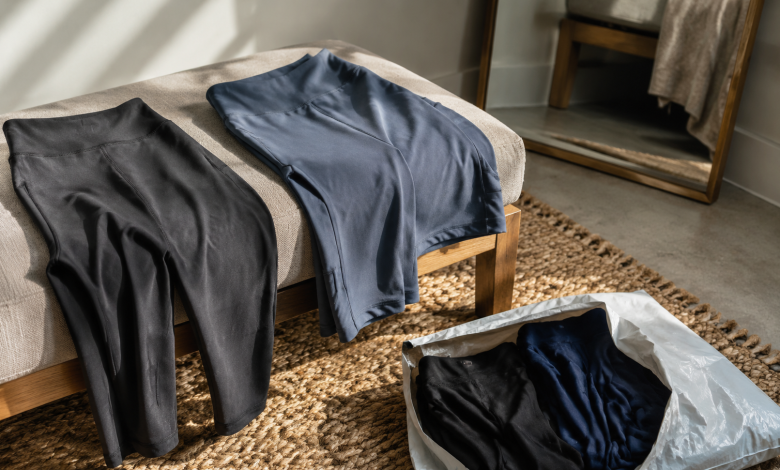
You put them back on the rack. You go home. You order a three-pack from Amazon for thirty-six bucks. They arrive in two days and feel fine. Perfectly adequate. But that fitting room moment lingers, the way a good meal at a restaurant lingers when you’re eating leftovers the next day. You know the difference exists. The question is whether that difference is worth what they’re asking.
This is the tension millions of women (and a growing number of men) navigate every time athleisure shopping rolls around. The yoga pants market has exploded into a multi-billion-dollar industry, and the price spectrum is staggering. You can spend twelve dollars at a fast-fashion retailer or four figures on high-end designer activewear. Most of us land somewhere in between, haunted by the possibility that we’re either wasting money or cheating ourselves.
So let’s get honest about what you’re actually paying for.
What Happens at the Fabric Level
Budget leggings and luxury leggings often look identical on a hanger. Same black, same high-waisted silhouette, same promise of four-way stretch. The divergence starts at the molecular level, in how the fibers are engineered and woven together.
Premium brands typically use proprietary fabric blends. Lululemon’s Nulu, Alo Yoga’s Airbrush, Girlfriend Collective’s recycled RPET these aren’t just marketing names slapped onto generic polyester. They’re developed through years of material science testing, built to manage moisture, retain shape through hundreds of washes, and resist that dreaded see-through squat test. The compression is calibrated. The seams are flatlocked to reduce chafing during long holds or high-intensity movement.
Budget options rely on standard nylon-spandex blends sourced from mass textile suppliers. They stretch. They cover. They do the job for a while. But after twenty or thirty washes, the elastane breaks down. The waistband loosens. Pilling appears along the inner thighs. The color fades from obsidian to a sad charcoal. You replace them, and then replace the replacement, and eventually you’ve spent the same hundred dollars across five pairs that each lasted a few months.
This is the cost-per-wear argument luxury brands love to make, and it holds up more often than skeptics want to admit. A well-made pair of yoga pants that survives three years of regular use at a cost of one hundred and twenty dollars breaks down to roughly forty dollars a year. A budget pair that lasts four months and costs twenty-five dollars runs you seventy-five dollars annually, plus the hassle and waste of constant repurchasing.
Performance Under Pressure
If you practice yoga casually at home, following a twenty-minute YouTube flow a few mornings a week, the performance gap might never bother you. Budget leggings can handle gentle movement without revealing their limitations.
But increase the intensity and the gap widens fast. Hot yoga exposes cheap fabric like nothing else. Ninety minutes in a hundred-degree room, cycling through warriors and deep twists, generates a punishing amount of sweat and friction. Low-quality leggings become translucent. They slide. They bunch behind the knees. You spend half of class adjusting instead of breathing.
Runners notice it too. So do cyclists, CrossFit devotees, and anyone who asks their leggings to perform under sustained physical stress. Premium fabrics manage moisture transport differently. They pull sweat away from skin without becoming saturated, and they dry faster during rest intervals. The result is tangible comfort, not branding mystique.
There’s also the question of support. Higher-end leggings often incorporate graduated compression zones tighter around the calves and quads, gentler at the hips. This isn’t just aesthetic sculpting. Compression improves blood flow during exercise and can reduce muscle fatigue during longer sessions. Budget pairs offer uniform compression at best, often just snugness without strategic engineering.
The Psychology of Wearing Something Beautiful
We can talk about fabric technology until our eyes glaze over. But let’s be real about a less rational force at play: how clothing makes you feel.
There’s research supporting what most of us know intuitively. A2012 study from Northwestern University coined the term “enclothed cognition” to describe how the symbolic meaning of clothes influences the wearer’s psychological state. When you put on something you perceive as high-quality and intentional, your confidence shifts. Your posture changes. You show up differently.
For a yoga practice which is fundamentally about presence, about being in your body without judgment that psychological component isn’t trivial. Feeling good in what you’re wearing removes a layer of self-consciousness. It lets you focus on your breath instead of wondering whether the person behind you can see through your leggings.
This doesn’t mean you need luxury to feel confident. Plenty of people feel perfectly empowered in a fifteen-dollar pair from Target. But for others, the investment carries meaning beyond the material. It signals commitment to their practice. It says this matters to me. And that story we tell ourselves, however irrational, shapes behavior in measurable ways.
The Brand Tax and What You’re Subsidizing
Here’s where intellectual honesty requires us to push back on the luxury narrative. Not every dollar of that price tag goes toward better fabric or smarter construction.
You’re paying for marketing. Lululemon spends hundreds of millions annually on brand positioning the curated store experiences, the community events, the ambassador program, the aspirational Instagram grid.Alo Yoga sponsors celebrity partnerships and red-carpet placements. These costs get baked into every pair of leggings.
You’re paying for real estate. Premium brands occupy expensive retail spaces in upscale neighborhoods because physical presence reinforces brand perception. That storefront on Fifth Avenue or Abbot Kinney isn’t free.
You’re paying for belonging. Luxury athleisure has become a social signifier. The Lululemon logo on your hip communicates something to a certain tribe, just like a North Face jacket or a Patagonia vest does in their respective circles. This isn’t inherently wrong, but it’s worth recognizing that a portion of your hundred-plus dollars is buying cultural membership, not performance.
Some mid-range brands have cracked this open by delivering comparable fabric quality without the brand tax. Colorfulkoala, CRZ Yoga, and Baleaf have built loyal followings by reverse-engineering the material experience of luxury brands at a fraction of the price. They skip the flagship stores. They skip the celebrity endorsements. They ship direct. And increasingly, reviewers can’t distinguish their fabrics from the big-name equivalents in blind tests.
Sustainability Complicates Everything
The cheap leggings problem extends beyond your closet. Fast fashion activewear contributes to a staggering volume of textile waste roughly ninety-two million tons globally each year, much of it synthetic and effectively non-biodegradable. When budget leggings fall apart after a few months and end up in landfill, the environmental cost doesn’t appear on your receipt.
Some luxury brands have responded with genuine sustainability efforts. Girlfriend Collective builds its entire line from recycled water bottles and fishing nets. Patagonia’s activewear uses Fair Trade Certified labor. These are verifiable commitments that add cost to production but reduce harm downstream.
Others slap a green leaf on the hangtag and call it a day. Greenwashing is rampant in activewear, and price alone doesn’t guarantee ethical production. A hundred-dollar pair made in exploitative conditions isn’t morally superior to a thirty-dollar pair from a transparent supply chain.
If sustainability matters to you and for the planet’s sake it should the answer isn’t simply to buy expensive. It’s to buy deliberately. Research the brand. Check their certifications. Choose fewer pairs that last longer and that you’ll actually wear until they’re finished.
Where the Math Actually Lands
The honest answer to whether hundred-dollar yoga pants are worth it depends entirely on how you live in them.
If you practice regularly, if you sweat hard, if durability and performance genuinely affect your experience, the investment usually pays back over time. Not because luxury is inherently superior, but because high-performance fabric earns its keep through longevity and function.
If yoga is occasional and low-key, if your leggings mostly see the couch or a casual errand run, budget pairs serve you fine. There’s no shame in that math.
The worst financial decision isn’t buying cheap or buying expensive. It’s buying without thinking grabbing luxury out of status anxiety or stockpiling budget pairs you don’t love and never reach for. Either way, you end up spending more and feeling less.
One good pair, worn with intention, beats a drawer full of compromises. That’s true whether the tag reads thirty dollars or a hundred and thirty. Know what you need, know what you value, and spend accordingly. The leggings themselves won’t transform your practice. But removing the distraction of ill-fitting, failing gear just might clear the space for something to shift.