The Lazy Girl’s Guide to Mixing Patterns Like a Pro
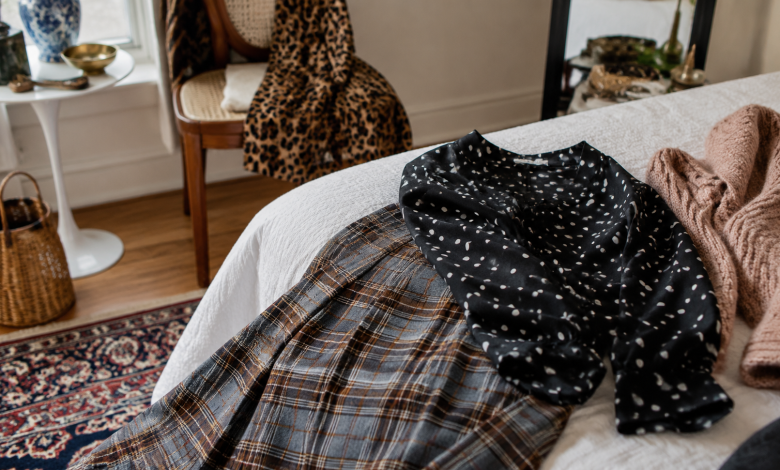
I wore polka dots with plaid to brunch last spring and my friend Megan literally said, “Oh, are we doing that on purpose?” We were. Kind of. I’d seen it on Pinterest the night before and figured I could pull it off.
I could not.
The dots were too big, the plaid was too busy, and the whole thing looked like a clearance rack had a meltdown on my body. But here’s the thing that disaster taught me more about pattern mixing than any fashion article I’d ever skimmed. Because once you understand why something looks wrong, you start seeing why other combinations look effortlessly right.
So if you, like me, would rather figure out a few lazy shortcuts than spend twenty minutes in front of the mirror swapping tops, this one’s for you.
The One Rule That Actually Matters When Mixing Patterns
Forget everything you’ve read about “rules of three” or color wheel theory or whatever complex system some fashion blogger with a ring light and a capsule wardrobe is pushing. The only rule you really need is this:
Vary the scale.
That’s it. One big pattern, one small pattern. A chunky floral with a thin stripe. A bold geometric with a delicate dot. When both patterns are the same size, your eye doesn’t know where to land and the whole outfit turns into visual static. But when one pattern is clearly dominant and the other plays backup? Suddenly you look intentional. Put together. Like you have taste and opinions.
I’m not saying the other “rules” are useless. But if you only remember one thing while getting dressed at 7:42 AM with coffee breath and half-dry hair remember scale.
Why “Clashing” Is Not the Disaster You Think It Is
Here’s my slightly controversial take: most people are way too scared of clashing. The fashion industry has spent decades telling us that patterns need to “go together,” and we’ve internalized that so deeply that we default to safe solid-colored outfits just to avoid making a mistake.
But have you ever looked at what actual stylish people wear on the street not on runways, not in editorials, but regular humans with good taste walking through Brooklyn or Austin or wherever? They clash. They do it a lot. And it works because confidence reads as intentionality.
A leopard print skirt with a striped tee shouldn’t work according to the rules. Yet it does. Every time. Because leopard print functions almost like a neutral at this point which brings me to my next lazy shortcut.
Your Cheat Code: Patterns That Act Like Neutrals
Some patterns are so ubiquitous that your brain processes them almost like solid colors. These are your best friends when you’re too tired to think:
Leopard print. Breton stripes. Classic gingham. Small polka dots. A basic plaid in muted tones.
Pair any of these “neutral patterns” with a bolder, louder print and you’ll look like you planned it. You didn’t. You just grabbed the leopard midi skirt because it was on top of the laundry pile. But nobody needs to know that.
My friend Dani who genuinely has the best closet of anyone I know told me once that she treats her striped shirts the same way she treats a white tee. She throws them under everything. Florals, abstract prints, even other stripes. “Stripes are basically a solid,” she said, and honestly? She’s not wrong.
The Anchor Piece Trick for Pattern Mixing
Okay so here’s the laziest method I’ve found, and it works embarrassingly well. Pick one patterned piece that you love. That’s your anchor. Now find a second pattern that shares at least one color from the first piece.
That’s the whole trick. Shared color = instant cohesion.
Your floral blouse has some navy in it? Grab navy pinstripe pants. Your plaid scarf has a thread of rust orange? Pair it with a rust-toned abstract print top. The color connection does all the heavy lifting while you do absolutely nothing except own two things that happen to share a shade.
I used to overthink this so much. I’d stand in my closet holding pieces up next to each other like I was trying to match paint swatches. But once I started just looking for one shared color even a minor accent color buried in the pattern everything clicked faster.
When to Stop at Two (and When Three Works)
Two mixed patterns is the sweet spot for most days. It’s enough to look interesting without requiring a degree in visual composition. But can you do three?
Yeah. Sometimes.
Three patterns works when one of them is tiny and almost invisible like a micro-check or a barely-there pinstripe. It also works when your third pattern is in an accessory: a printed scarf, a patterned bag, a pair of fun socks peeking out. Accessories get more forgiveness because they occupy less visual real estate.
But honestly and I might be wrong about this depending on your personal style if you’re reading an article called “The Lazy Girl’s Guide,” three patterns is probably more effort than you want to put in on a Tuesday. Stick with two. Master that. Three can come later when you’re feeling ambitious, which for me is approximately twice a year.
My Actual Failures (So You Can Skip Them)
Let me save you some grief. Here’s what I’ve tried that did not work:
Mixing two patterns with the exact same scale and similar colors. I wore a medium floral with a medium paisley once and looked like a couch from1987. Not in a cool vintage way. In a sad way.
Trying to make two “statement” patterns coexist. A bold tropical print with an equally bold abstract geometric? In theory, maximalism. In practice, costume.
And the worst one pairing a busy pattern with another busy pattern in clashing warm and cool tones simultaneously. I looked genuinely unwell. My mom asked if I was going through something.
The lesson from all of these? When in doubt, let one pattern scream and the other one whisper. That’s not a fashion rule it’s just physics for your eyeballs.
The Confidence Thing (Which Sounds Cliché but Isn’t)
Look, I know “just be confident” is the most annoying advice on the planet. That’s not quite what I mean. What I mean is: once you put the outfit on and walk out the door, stop adjusting. Stop explaining. If someone asks about your outfit, say “thanks” or “I know, right?” and move on.
The difference between someone who looks like they’re mixing patterns on purpose and someone who looks confused is literally just posture and zero apologizing. I’ve watched it happen in real time same outfit, two different attitudes, completely different result.
So wear the stripes with the florals. Wear the checks with the leopard. Wear the polka dots with the plaid if you want just maybe not the exact combination I tried at that brunch.
Actually, you know what? Even that might work for you. Try it. The worst that happens is your friend Megan roasts you, and then you learn something. Which, if I’m being honest, is exactly how all the best-dressed people I know figured it out in the first place.
What’s the wildest pattern combo you’ve actually pulled off?