5 Common Swaddling Mistakes That Break Baby’s Sleep

5 Common Swaddling Mistakes That Break Baby’s Sleep
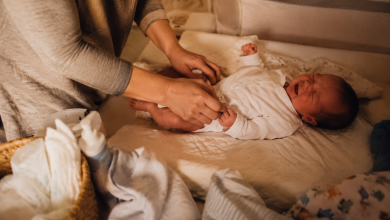
There’s a particular kind of desperation that sets in around2 a.m. when you’ve tried everything feeding, rocking, shushing and your newborn is still wide-eyed and furious. You swaddle them, tuck the edges just like the nurse showed you, and lay them down. Two minutes later, they’ve kicked free and the crying starts again. You wonder if you’re doing something wrong. Chances are, you are. Not because you’re a bad parent, but because swaddling looks simpler than it actually is.
The truth is that a poorly executed swaddle can actively disrupt sleep rather than support it. Most parents assume that any attempt at wrapping is better than none. That assumption is where the trouble begins.
The Wrap Is Too Loose and Baby Knows It
A swaddle that isn’t snug enough is worse than no swaddle at all. When the fabric has too much give, tiny arms work their way out within minutes. More critically, loose swaddling fails to suppress the Moro reflex that full-body startle response where newborns fling their arms outward as if they’re falling. This reflex is completely normal and serves a biological purpose, but during sleep it becomes the enemy. A single startle can jolt a baby from deep sleep to full wakefulness in under a second.
The fix isn’t complicated, but it does require intention. The arms need to be held firmly against the body, and the chest wrap should be snug enough that you can just barely slip two fingers underneath. Many parents hesitate at this point, worried they’re wrapping too tight. Unless you’ve restricted the hips or chest to the point of discomfort, you almost certainly haven’t. Newborns are used to the extreme pressure of the womb. A secure swaddle doesn’t feel confining to them it feels like home.
Wrapping the Hips Too Tight
Here’s where the pendulum swings the other way. While the upper body needs firm containment, the lower body absolutely does not. Swaddling the legs straight and pressed together puts dangerous stress on developing hip joints. The condition it causes hip dysplasia isn’t just a theoretical concern. The International Hip Dysplasia Institute has long flagged tight leg swaddling as a contributing factor, and cases are documented in pediatric orthopedic practices around the world.
Healthy hip development requires that the legs be allowed to bend upward and outward, frog-leg style, with the knees higher than the buttocks. A properly swaddled baby from the waist down should look a little like they’re sitting in a small hammock hips open, knees bent, legs free to move within the pocket of fabric. Parents who’ve been taught to wrap the legs straight because it looks neater or keeps the swaddle from coming undone are trading their baby’s joint health for tidiness. That’s not a trade worth making.
Using the Wrong Fabric for the Temperature
Overheating is one of the most underappreciated risks in infant sleep. Babies cannot regulate their own body temperature effectively in the early weeks, and a swaddle made from a thick or non-breathable fabric in a warm room creates a thermal environment that can push core body temperature to dangerous levels. The link between overheating and SIDS has been studied extensively, and while the mechanisms are still being investigated, the correlation is clear enough that every major pediatric organization includes temperature management in its safe sleep guidelines.
Muslin remains the gold standard for most environments because it allows air circulation while still providing the gentle pressure a swaddle requires. A lightweight cotton blend works well in cooler climates or air-conditioned rooms. What doesn’t work: fleece, thick blankets repurposed as swaddles, or layering a swaddle over a sleep sack because the room felt chilly that night.
A useful temperature check that requires no tools touch the back of baby’s neck or the center of the chest. Cool hands and feet are normal for newborns. A sweaty neck or flushed chest is a sign the environment is too warm and the swaddle needs to come off or be swapped for something lighter.
Continuing to Swaddle After Baby Starts Rolling
This one isn’t just a sleep mistake. It’s a safety issue. The moment a baby shows any sign of rolling even an early, clumsy attempt from back to side swaddling becomes a genuine hazard. A swaddled baby who rolls to their stomach can’t use their arms to push up and reposition their airway. What was a comfort tool at six weeks becomes a suffocation risk at four months.
The tricky part is that this transition often happens right when parents feel like they’ve finally figured out sleep. The swaddle is working, nights are getting longer, everyone is less exhausted. Then rolling starts, and the whole system has to change. It’s a genuinely disorienting moment.
The bridge between swaddling and unswaddled sleep doesn’t have to be a cliff edge. Transitional swaddles that leave one or both arms free let babies get used to having their limbs available without losing all the comfort cues overnight. Some families do one arm out for a week, then two. Others go cold turkey and survive three rough nights before their baby adapts. There’s no single right approach, but there is one firm rule: once rolling begins, the traditional full swaddle ends.
Swaddling a Baby Who Doesn’t Want to Be Swaddled
This sounds obvious, but it gets overlooked more than you’d think. Not every baby responds positively to swaddling. Some protest from the first attempt. Others tolerate it for a few weeks and then begin fighting it with increasing intensity. When parents interpret this resistance as a battle to be won something to push through they end up in a nightly struggle that elevates cortisol levels in both baby and parent and makes sleep harder, not easier.
The resistance itself is information. Some babies have a strong self-soothing instinct that requires hand access they need to get their fingers near their mouth to settle. Swaddling physically prevents this. Others simply find the containment distressing rather than comforting, and no amount of technique adjustment is going to change that.
If your baby consistently arches away from the swaddle, cries harder when wrapped than when loose, or calms down immediately when you free their arms, that’s not a phase to push through. It’s a signal to stop swaddling and explore alternatives. A sleep sack, a firm mattress surface, and consistent white noise can recreate many of the environmental cues that help newborns settle without the full wrap.
Swaddling, when done well, genuinely supports sleep in the early weeks. The science behind it maps directly onto newborn neurology the Moro reflex suppression, the womb-like containment, the reduction in unnecessary movement during light sleep stages. But the gap between a well-executed swaddle and a harmful one is smaller than most parents realize. The fabric matters. The tightness gradient matters. The timing of when you stop matters.
Paying attention to these details isn’t overcaution. It’s just the difference between a tool that works and one that quietly works against you at 2 a.m. when you can least afford it.